
The First Christmas: A Story of Divine Interruption
There's something profound about the way heaven breaks into ordinary moments. Not with fanfare for the powerful, not with announcements to the religious elite, but with a sudden burst of glory in a field where working-class shepherds kept watch over their flocks.
When Heaven Touched Earth
Picture the scene: shepherds going through their nightly routine, knowing each sheep by sound, watching the perimeter for predators, keeping the fire going. It was just another night—until it wasn't. Suddenly, brilliance pierced the darkness. An angel stood before them, wrapped in the glory of God, and everything changed.
The shepherds' first response? Fear. Not the kind of fear that comes from danger, but the overwhelming awareness that something holy had entered their space. When the divine intersects with the human, our natural response is to recognize how small we are, how unworthy we feel.
But the angel's first words cut through that fear: "Don't be afraid."
This is always God's approach when He comes bearing gifts rather than judgment. Fear is the opposite of faith, and what was about to be announced required faith to receive it.
The shepherds' first response? Fear. Not the kind of fear that comes from danger, but the overwhelming awareness that something holy had entered their space. When the divine intersects with the human, our natural response is to recognize how small we are, how unworthy we feel.
But the angel's first words cut through that fear: "Don't be afraid."
This is always God's approach when He comes bearing gifts rather than judgment. Fear is the opposite of faith, and what was about to be announced required faith to receive it.
Good News of Great Joy
The message was simple yet earth-shattering: "For there is born to you this day in the city of David a Savior, who is Christ the Lord" (Luke 2:11).
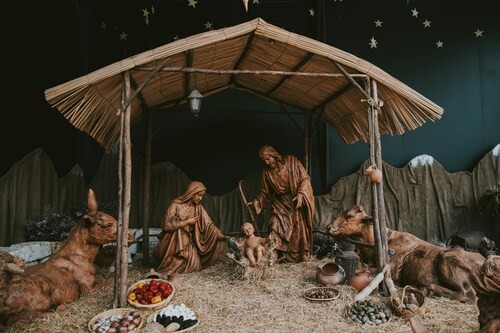
A Savior. That single word carries the weight of humanity's greatest need. We needed saving—from sin, from separation, from ourselves. And in a humble stable in Bethlehem, wrapped in swaddling clothes and lying in a manger, heaven's answer to humanity's problem had arrived.
The angel wasn't alone for long. Suddenly, a multitude of the heavenly host appeared, and the night sky erupted with praise: "Glory to God in the highest, and on earth peace to those on whom his favor rests."
That last phrase is crucial. While the invitation goes out to all humanity, the peace being offered is for those who would receive it, for those who would believe. Without faith, it's impossible to please God. The gift is available to everyone, but it must be received.
A Savior. That single word carries the weight of humanity's greatest need. We needed saving—from sin, from separation, from ourselves. And in a humble stable in Bethlehem, wrapped in swaddling clothes and lying in a manger, heaven's answer to humanity's problem had arrived.
The angel wasn't alone for long. Suddenly, a multitude of the heavenly host appeared, and the night sky erupted with praise: "Glory to God in the highest, and on earth peace to those on whom his favor rests."
That last phrase is crucial. While the invitation goes out to all humanity, the peace being offered is for those who would receive it, for those who would believe. Without faith, it's impossible to please God. The gift is available to everyone, but it must be received.
Why Shepherds?
Of all the people God could have chosen to receive this announcement first, why shepherds? They were among the lowest in society—considered unclean, unable to worship at the temple, excluded from religious life despite providing the very lambs used for sacrifice.
But that's precisely the point.
God was making a statement that echoes through the ages: No one is too far gone. No one is disqualified. The outcasts, the overlooked, the ones society deems unworthy—God sees them, knows them, and includes them in His redemptive plan.
There's beautiful symbolism here too. King David, from whose lineage the Messiah would come, was himself a shepherd. These shepherds watching over lambs near Jerusalem were possibly tending the very sheep that would be used for temple sacrifices. And now they were being told about the ultimate Lamb of God who would take away the sin of the world.
God wastes nothing. Every detail matters. Every connection points to something greater.
But that's precisely the point.
God was making a statement that echoes through the ages: No one is too far gone. No one is disqualified. The outcasts, the overlooked, the ones society deems unworthy—God sees them, knows them, and includes them in His redemptive plan.
There's beautiful symbolism here too. King David, from whose lineage the Messiah would come, was himself a shepherd. These shepherds watching over lambs near Jerusalem were possibly tending the very sheep that would be used for temple sacrifices. And now they were being told about the ultimate Lamb of God who would take away the sin of the world.
God wastes nothing. Every detail matters. Every connection points to something greater.
The Response of Faith
The shepherds didn't hesitate. They didn't say, "Let's think about this" or "Maybe tomorrow." Luke 2:15 records their immediate response: "Let us now go to Bethlehem and see this thing that has come to pass."
They went with haste. They found Mary, Joseph, and the baby, exactly as the angel had described. And then—and this is crucial—they didn't keep it to themselves. They "made widely known" what they had been told about this child (Luke 2:17).
They became the first evangelists of the gospel message. They didn't care who would listen or who would reject them. They had encountered something too magnificent to contain, and they had to share it.
Meanwhile, Mary "kept all these things and pondered them in her heart" (Luke 2:19). She rehearsed them, remembered them, meditated on them. This is what we're called to do with God's word—not just hear it and forget it, but keep it, treasure it, and let it transform us from the inside out.
They went with haste. They found Mary, Joseph, and the baby, exactly as the angel had described. And then—and this is crucial—they didn't keep it to themselves. They "made widely known" what they had been told about this child (Luke 2:17).
They became the first evangelists of the gospel message. They didn't care who would listen or who would reject them. They had encountered something too magnificent to contain, and they had to share it.
Meanwhile, Mary "kept all these things and pondered them in her heart" (Luke 2:19). She rehearsed them, remembered them, meditated on them. This is what we're called to do with God's word—not just hear it and forget it, but keep it, treasure it, and let it transform us from the inside out.
The Magnitude of the Moment
All of heaven had been waiting for this. From the Garden of Eden, when sin first entered the world, God had promised a solution. Prophets had spoken of it. Generations had longed for it. And finally, in the fullness of time, God Himself decided to dwell with us.
Think about that: The Creator of the universe, who spoke galaxies into existence, chose to enter His creation as a vulnerable infant. He didn't send a representative. He didn't delegate the task. He came Himself.
This wasn't just a theological event—it was personal. God looked at broken humanity and said, "Let me help you. I'm here."
Think about that: The Creator of the universe, who spoke galaxies into existence, chose to enter His creation as a vulnerable infant. He didn't send a representative. He didn't delegate the task. He came Himself.
This wasn't just a theological event—it was personal. God looked at broken humanity and said, "Let me help you. I'm here."
Reclaiming the Season
In our modern world, it's easy to get caught up in the commercialization of Christmas. The stress of shopping, the traffic, the expenses, the traditions that have lost their meaning. But the true heart of this season is a story of divine love breaking into human history.
It's about remembering that we were desperate and He came. We were lost and He found us. We were separated and He bridged the gap.
The shepherds didn't worship the angel—they worshiped the One who sent him. They didn't get distracted by lesser things. They focused on what mattered most: God had done something miraculous, and their response was immediate faith, joyful worship, and bold proclamation.
It's about remembering that we were desperate and He came. We were lost and He found us. We were separated and He bridged the gap.
The shepherds didn't worship the angel—they worshiped the One who sent him. They didn't get distracted by lesser things. They focused on what mattered most: God had done something miraculous, and their response was immediate faith, joyful worship, and bold proclamation.
Living in Light of the Gift
This Christmas season, may we recover the wonder that filled that field on the first Christmas night. May we remember that the gift given in Bethlehem wasn't just for a moment, it changed eternity. May we, like the shepherds, respond with faith that moves us to action, with joy that can't be contained, and with a message that must be shared.
The Savior has come. Glory to God in the highest. And on earth, peace to those who believe.
That's news worth celebrating—not just in December, but every day of our lives.
The Savior has come. Glory to God in the highest. And on earth, peace to those who believe.
That's news worth celebrating—not just in December, but every day of our lives.
Posted in Christian Walk, Christmas
Posted in Christmas, Rememberance, Christian Walk, Jesus, Reason for the Season, God, Shepherds, Faith, Christian
Posted in Christmas, Rememberance, Christian Walk, Jesus, Reason for the Season, God, Shepherds, Faith, Christian
Recent
Standing in the Gap: The Power of Intercession and What It Means for You
October 5th, 2026
Songs, Hymns, and Spiritual Songs: The Forgotten Power of a Joyful Heart
September 28th, 2026
What Will You Leave Behind? The Power of a Kingdom Legacy
September 21st, 2026
Loose Them and Set Them Free: Your Role in the Miracle
September 14th, 2026
The Affairs of the Heart: Where Your Treasure Reveals Everything
September 7th, 2026
Archive
2026
January
February
March
April
May
June
The Harvest Is Plentiful: Answering the Call to ServeNavigating Through the Fog of Doubt: Finding Faith When You Can't See the Way ForwardThe Power of Truth in a World of DeceptionThe Ever-Present Spirit: Understanding God's Breath in Our LivesBreaking Free: Understanding Generational Impact and God's Mercy
July
August
The Wonders Awaiting Us: A Glimpse Into Heaven's RealityWhen God Provides: Understanding Divine Provision in Every SeasonThe Paradox of Divine Love and Justice: Understanding God's VengeanceReturning to Your First Love: The Foundation of EverythingFinding Clarity in the Storm: What the Bible Says About Wise Counsel
September
2025
2024
March
December
No Comments